Strange Ships from Strange Places

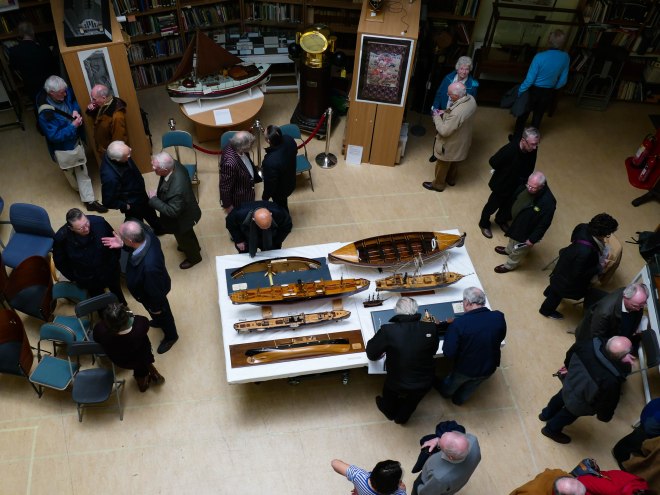
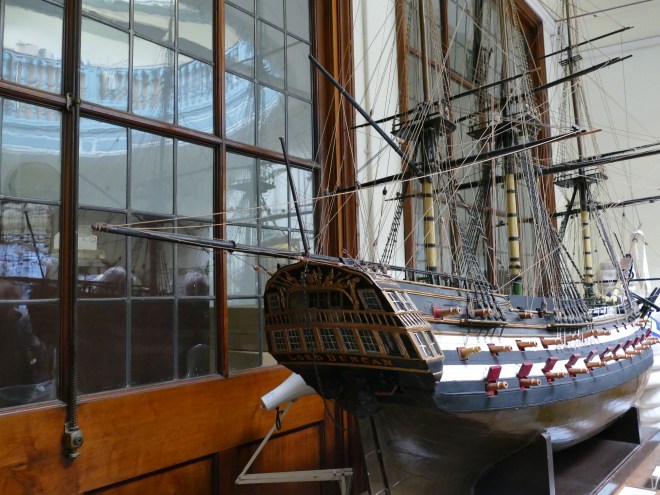
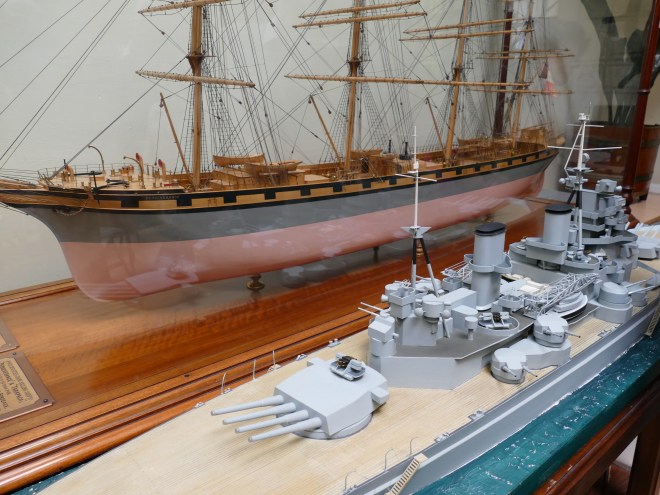
I attended the Ship Model Study day on Wednesday 22nd of February, at Barrack Street Museum Collections Unit. The collection has over ninety different models, some built by local amateurs enthusiast while other models crafted by ship builders who commissioned them to attract support and investment.
p1130837

Over fifty people attended the study day, the majority, were local men who wanted to discuss and share their fascination for these models. It amazed me, how a model, a copy or imitation of a real ship could build discussions, sharing culture and establishing a romantic notion of Dundee’s shipping history. John Duncan described a nostalgic image of Dundee Docklands in his speech in 1911.[1]

“Strange ships from many strange places: huge swollen Dutch hulls that looked too lazy for anything but a canal, and lean sea-going ships; and full of foreign folk; swarthy creatures like pirates from the Spanish Main: Chinamen and Hindoos, and an occasional Lapp; lanky, blue-eyed Scandinavians talking together an unintelligible tongue. And queer rigging, and carving, the figureheads, and windows in the stern, the gilding, and the paint, and the whitewash, and the tar; and the moving water caught all this picturesqueness, and shook it into twisting Chinese dragons of liquid dancing fire. What a wonder it all was, what a delightful place for a Sunday afternoon.”[2]
p1130818

The group engaged with each model in three stages: denotation, demonstration, and interpretation.[3] I questioned a few visitors about the appeal of a model ship and the responses were varied. Some interest was developed from working in the shipping industry, while others simply admired the craftsmanship and attention to detail. All agreed these models evoked the imagination of what it was like to live and work on the ships. The model ships allowed the construction of a narrative beyond the object.
p1130827

A small collection of carefully chosen ship models, representing ships that sailed from Dundee or tell a Dundee story. Will be soon be moved and displayed in the ‘Dundee and the World exhibition’ at the McManus galleries.

[1] Jarron, M (2015). “independent & individualist” Art in Dundee 1867-1927. Dundee: Abertay Historical Society. P100.

[2] Ibid

[3] Frigg, R and Hartmann, S. (2006). Models in Science. Available: https://plato.stanford.edu/entries/models-science/. Last accessed 26th Feb 2017.
Dundee’s Oldest Onesie

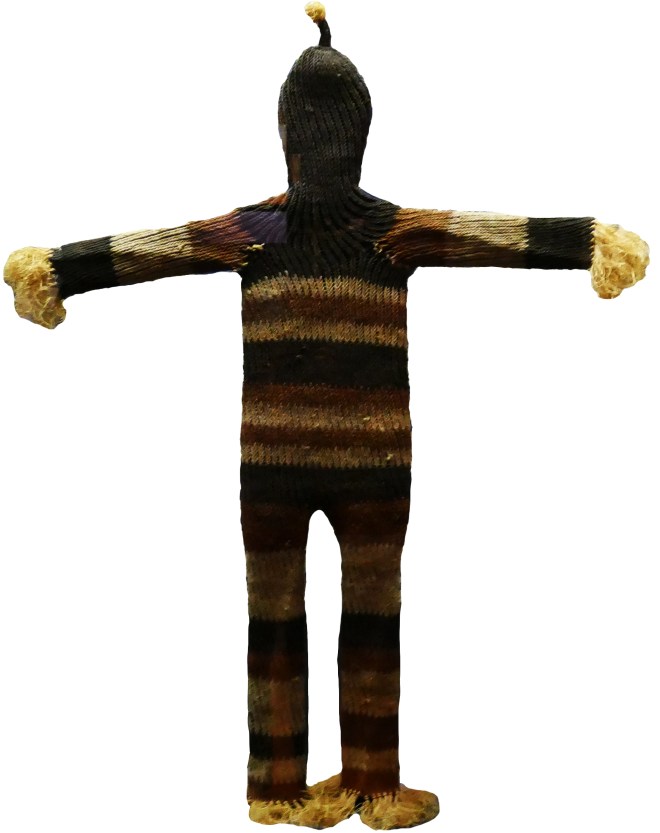
Last night I joined the ‘YAG’s’ (the Youth Action Group) for a wander around the ‘Dundee and the World’ exhibition located in the magnificent Albert Hall at the McManus Galleries. The group wanted to sketch and discuss some of the things on display. However, I did not expect a discussion to be focused on “Dundee’s oldest Onesie”, a quote from a member of the group.

onesie

This ‘Onesie’ is not an adult sized babygro but an early 20th century costume worn as a disguise, by members of the Nigerian Ekpe secret society, made from Netted string and Raffia.[1] Yet the discussion provoked themes of youth culture and the fashion of wearing a giant romper suit. The interaction between the group and the object began to build their sense of identity by exploring something from the past and comparing it to present fashion culture, highlighting;

“The passage of time, which operate predictability on the objects themselves, can do strange things to their meanings, and the importance of some will change as a result.”[2]

p1130796-copy

The museum carefully archives artifacts with specific historic details and dates to preserve valuable objects, a value created by a society it represents. Yet a different time and culture can randomly change meanings. In the future, will people venture into a museum to see the ‘Onesie’ on display? What meaning will it transcend? And will they think we are a society of big babies?[3]

[1] The McManus. (Date unknown). Masquerade costume for ‘Ekpe’ Available: http://www.mcmanus.co.uk/content/collections/database/masquerade-costume-ekpe Last accessed 17th Feb 2017

[2] Matarasso, F (1997). Use or Ornament? The Social Impact of Participation in the Arts. Stroud: Comedia. P84

[3] Graham, L. (2013). Babygro Britain. Available: http://www.dailymail.co.uk/femail/article-2275285/Onesie-The-fashion-phenomenon.html#axzz2JffrmPI9. Last accessed 17th Feb 2017.

Khalkha Mongol Headdress

A story about the restoration of a Khalkha Mongol Headdress (pre-1900), loaned to the McManus Galleries in Dundee by L J Miller (1931).[1]

The Khalkha Mongol Headdress has been selected, restored and cared for by the McManus. The conversation reveals an object expressing meaning beyond its physical presence within the history of specific events; Mongolian trade routes, craftsmanship and the possible design influence of a headdress worn in Star Wars, Episode 1: The Phantom Menace.

The vocal sound creates meaning found outside language and the spoken word.[2] Inside our perception, the vocal sound allows you to hear the affect the headdress’s journey has had, on the speaker’s feelings.

“Feelings may also link feelings, and this superimposed relationship leads us to an in-between of in-betweens…”[3].

What we hear in tone and vocal expression reveals emotion. To listen and contemplate to the story, bridges us between our personal and shared feelings towards treasured objects. Binaural microphones were used to create an intimate listening experience, locating us in-between the self and the other. And the reverberating sounds of space in the museum, places us from our physical location to the museum, in-between here and there.

[1] Uknown author and date. Khalka headdress. Available: http://www.mcmanus.co.uk/content/collections/database/khalka-headdress. Last accessed 6th Feb 2017.

[2] “… as Ricoeur says, meaning or significance is already both perception and word.” Ihde, D. (2007). Listening and voice: Phenomenologies of sound. 2nd ed. Albany: State University of New York Press. P148

[3] Asenjo, F. G. (1988). In-between : an essay on categories, Center for Advanced Research in Phenomenology & University Press of America, Washington, D.C P139

Introducing ‘The People’s Story’

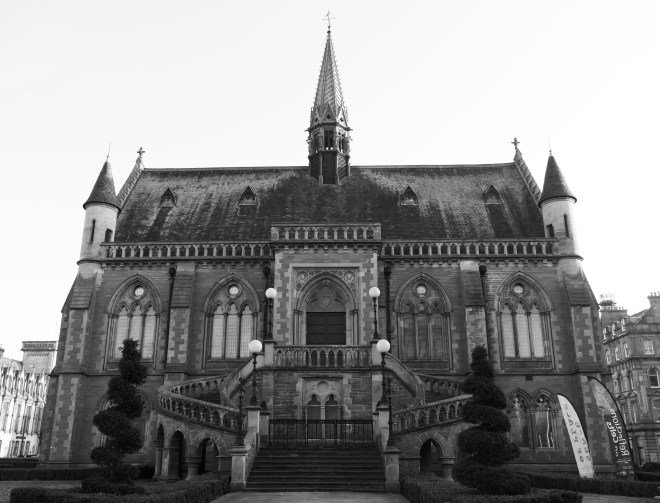
I have recently started  (a Making the Most of Masters) student placement at the McManus, Dundee’s Art Gallery and Museum. Working on a project called ‘The People’s Story’, running as part of a programme organized by the museum’s Learning & Engagement Team to celebrate the 150th Anniversary of the McManus. The project will explore the relationship between Dundee’s diverse communities, the museum and its collections.

mcmanus.jpg

The McManus already has an established form of engagement with a wide range of groups, trustees and communities. Each group engages with the museum in a different way and I would like to consider, what is normal? How do these different audiences normally engage with the museum, the gallery space and interpretation of its artifacts?

Beginning a project is always a daunting task but I’m happy to be working with a fellow student, Stuart McAdam and the creative learning team.  To begin my journey, I have decided to treat it like a walk. ‘The People’s Story’ will allow for an exploration into the relationships between city and the museum. Giving me the resources to collect stories about Dundee and to continue my research, into the dynamic engagement of public and private spaces, using similar methodologies from previous projects involving the tramlines and edgelands of Dundee.

***

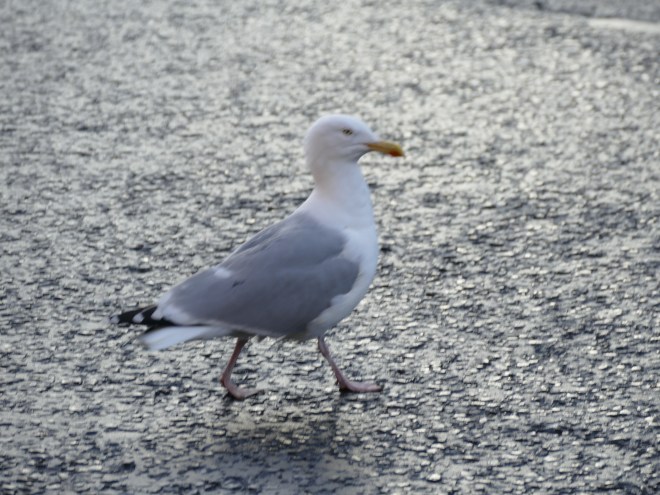
Quite unexpectedly, my first visit involved being followed by a Seagull who seemed to be heading in the same direction, the McManus, Dundee’s Art Gallery and Museum.

p1130709

My initial walk through the McManus was to observe the building, space and collections.

Everyday objects from seemingly insignificant past events have just as much validation as an object from a significant historical event.

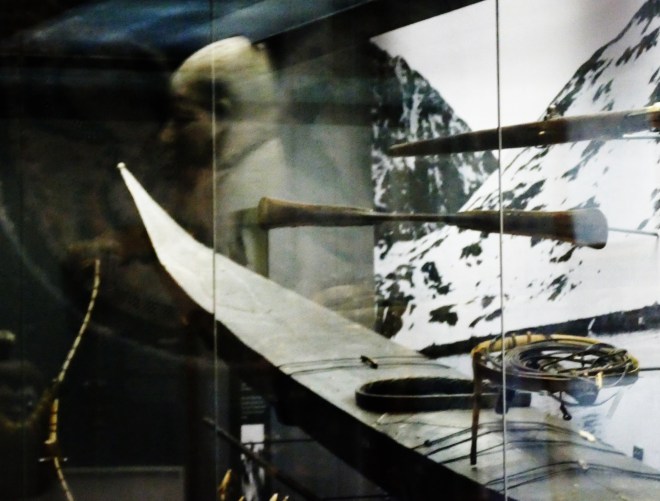
I noticed the reflections of objects, being mirrored upon the glass of the display cabinets. This reminded me of the process of memory and how people’s stories could place new memories, upon old memories projecting, spatially into a fourth dimension.[1] I wondered if a soundscape of stories collected around and about the McManus could also project into a new dimension.

p1130771-copy

I considered how a walk around a gallery, allowed the place to suggest appropriate sounds. I felt a sense of urgency moving in-between emotions and happenings. A sonic signature is an in-between space where the place is the symbol and the sound, the meaning.[2] The sound of a museum creates an in-between awareness. How people feel in the museum, or about its historical objects, could add something unique to our perception of the McManus and within that thought I found a new line of direction.

[1] “the process is that of continually compounding one and the same topomnesiacal resource.” Casey, E.S. (2002) Representing place: Landscape painting and maps. Minneapolis: University of Minnesota Press.p77

[2] “Thus for the poet in his ecstasy- or perhaps, agony- of the composition the trees are the symbols and the words are the meaning. He concentrates on the trees in order to get the words.” A.N Whitehead (1985). Symbolism: Its Meaning and Effect. New York: Fordham University Press. P12.

copyright © Olsen 2017

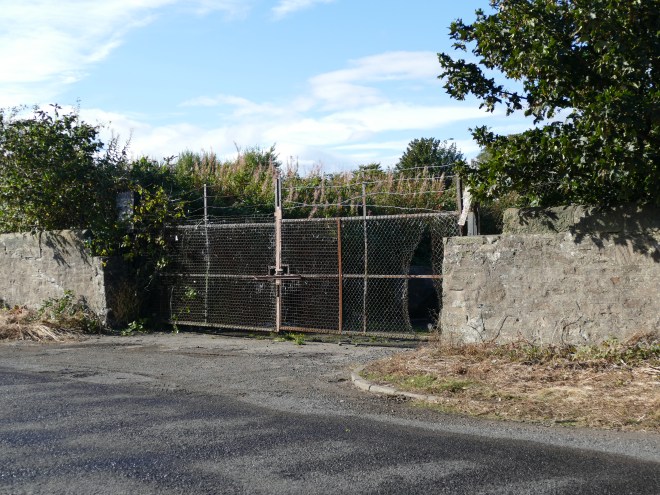
The Useless Gate

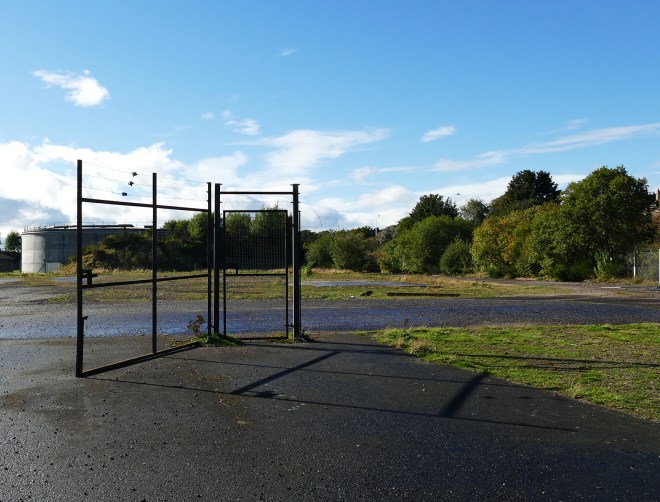
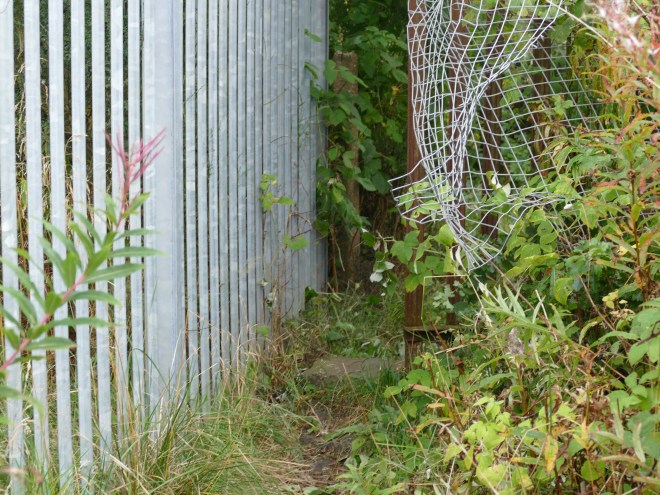
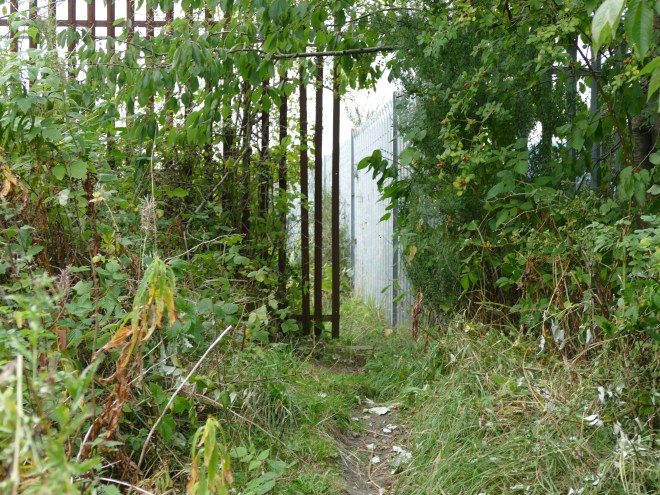
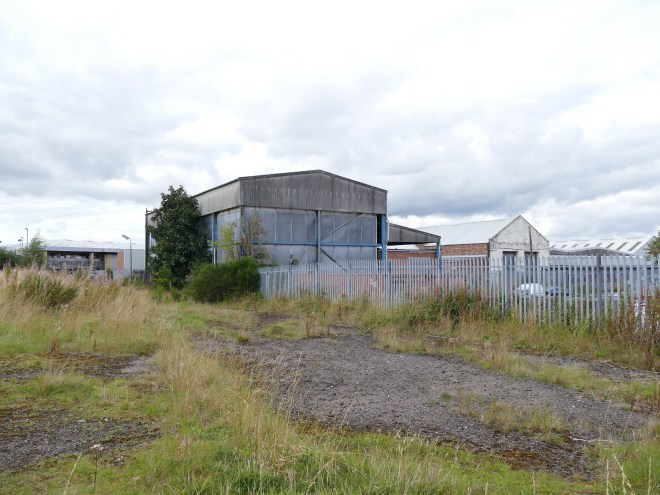
The useless gate with no point of entry encloses nothing. No longer approving entry or exit to flow. It stands easily in front of its past barricade and absent without its fence, what nonsense.

p1130590-copy-small

Still, my thoughts invade the space with an intensive survey of neglect. Without a barrier, it creates a bewildering pause; I even relax and unwind a little in the freshness of an invisible edge.

The gate still interrupts here and there, now and then. I begin to walk through space without the cliché of place, allowing a moment to contemplate on ever-changing times, tides, and light.

copyright © Olsen 2016

Darkness Veils a Debatable Zone

The space could be to the place what the word becomes when it is spoken…”[1]

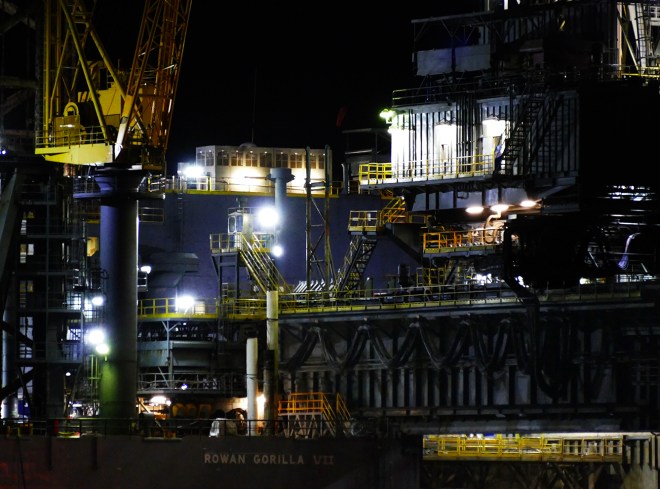
rowan-gorilla

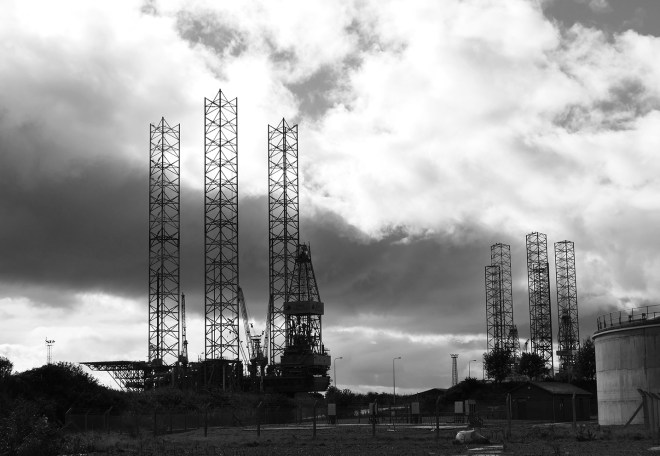
An undefined duality of place is concealed in the embellishment of night, hiding an industrial heritage and windswept Tay Estuary.

The sound merges space into place, sea into waves, oil rig into steel.

Darkness veils a debatable zone, with a cloaked identity of signification of a location. A possible plot or a new vision can be seen, in the form of renewable energy manufacturing.[2]

[1] Merleau-Ponty, M (1974). Phenomenology Of Perception. 6th ed. London: Routledge & Kegan Paul LTD. P173.

[2]“Dundee Port is an active deep water port with direct access to the North Sea. The Port has also been identified as the most strategically important and suitable port location for marine renewables.There are 25 hectares of available quayside land for renewable energy manufacturing.” Uknown Author (2016). Port Development Land. Available: https://www.dundeewaterfront.co.uk/zones/port/portdevelopmentland. Last accessed 13th Nov 2016.

copyright © Olsen 2016

A Discovery day for ‘Objet Trouvé’

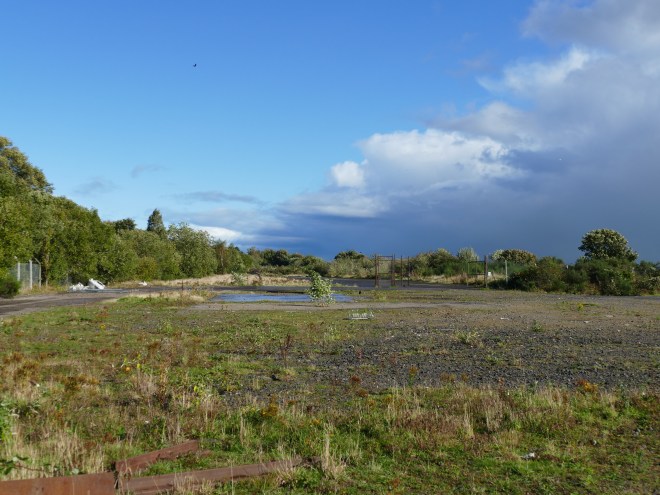
The discovery of tiny clues can be found in what’s left behind, in the thrown and broken.

leftstuff

No rhyme or reason in a no-mans-land and it discourages a sense of a place. Stinking of social contempt, exposing voids between industry and humanity. It is separated by an uncanny openness and presents a distance from Dundee’s waterfront dreams.

copyright © Olsen 2016

The In-between Castle

castle-in-the-sky-small

Above, dull maiden clouds linger,

in-between, an offshore fortress stands,

below, veils a filthy exchange.


Below, conflicting in mother’s pain,

in-between, harsh technology demands,

above, fort operator of the harr.


Above, supply till it dries,

in-between, binds murk to certain land,

below, bleed the earth for gain.


“Nature becomes a gigantic gasoline station, an energy source for modern technology and industry”[1]

[1] Heidegger, M (1966). Discourse On Thinking. New York: Harper & Row. p50.

copyright © Olsen 2016

A Place With No Lifetime Guarantee

My intimate explorations of edges persisted and my attention now shifts to the ties of in-between and excess.

“That the excess of space is correlative with the shrinking of the planet”[1]

p1130613

The property planet is a paradox of a progressive nation using technology, transport, and communication. I discover a new wasteland and its obvious excess, in pursuit of a new insight as a place of anonymity.

p1130543

Hunting for an unlimited ticket to the concrete, I awaken to the call of practical regulations… KEEP OUT! Yet by uncovering a broken privacy, I navigate the delights of familiarity, connecting a place to a ‘no lifetime guarantee’.

p1130551

I stand as a mannequin compelled by control and practice dark art of invisibility. Who will defend a places identity as it suffers from spatial anonymity?

copyright © Olsen 2016

[1] Augé, M (2008). Non-places: Introduction to an Anthropology of Supermodernity. 2nd ed. London: Verso. p25.

Disobeys Restriction

I imagine the city connects infinite layers of networks to defy.

Shaping the superficial modern metropolis by placing social fabric onto stitched architectural frames.

p1130459

“I operate as a man-machine interface.”[1]

The cyborg self within me emerges along the cities edges,

I hack the surface of space configurations.

p1130463

I am the seeking stranger of urban life who needs to disobey restriction;

feeling disconnected in a rebellious reunion of public and private outlines.

p1130464

I wander off the ordered path and find a more uncertain line of direction.

p1130452

copyright © Olsen 2016

[1] “I operate as a man-machine interface – that is, as a technological form of natural life – because I must necessarily navigate through technological forms of social life. As technological nature, I must navigate through technological culture. And technological culture is constitutively culture at a distance. Forms of life become forms of life at-a-distance. Because my forms of social life are so normally and chronically at-a-distance, I cannot navigate these distances, I cannot achieve sociality apart from my machine interface” Lash, S (2002). Critique of Information. London: Sage Publications. P15.