

copyright © Olsen 2016
copyright © Olsen 2016
 ANTI-CLIMB copyright © Olsen 2016
Walking the streets of Dundee, in search for details, I have noticed the lengths people go to in protecting their property from unwanted guests. These deterrents – high walls, thorny hedges and spikes – are a potential cause of injury to unwanted guests. In 1926, Lord Justice Scrutton argued;
“The general principle is that he who enters wrongly enters at his own risk.”
Historically, people have been known to put broken glass along the tops of walls, or use barbed wire fences. This would provide a very inconvenient time for a trespasser who would incur injury from cuts and scratches. The trespasser had no right to complain as a person had a right to defend of their property!”
Time and Law has moved on, occupiers have a duty of care for the safety of visitors using their premises and this extends to some responsibility to protect intruders, including trespassers! However it may be possible to dismiss this duty of care with a sign, warning people about the danger.


copyright © Olsen 2016
copyright © Olsen 2016

I found this graffiti on a wall while walking the Lochee tram line.
copyright © Olsen 2016

copyright © Olsen 2016
copyright © Olsen 2016
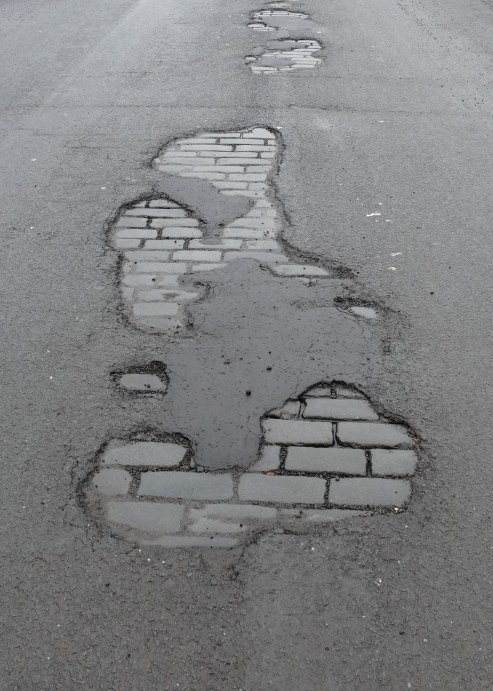
Through the body and mind, a place can be recognised.[1] Yet I noticed how distant the street is depending on my focus, using Mains Road, Dundee as an example of place. I would like us to consider a quote from my favorite philosopher, Heidegger and the image above:-
Heidegger would identified the street as ‘equipment’, a thing that is encountered in our environment, the place I use when I walk. I understand how its usefulness becomes remote and unnoticeable to myself as I walk, by thinking about my journey on Mains Road. The phycical street shifts between earth and world depending on my awareness of it. I am more likely to notice a passing car or pedestrian than the street I walk on, it only becomes available in my awareness by a disruptive influence of the uneven surface seen above.
[1] Casey, E. S. (2013) The Fate of Place: A Philosophical History. United States: University of California Press p244.
[2] Heidegger, M (1996). Being in Time (Trans Stambaugh, J). 3rd ed. New York: New York Press. P99.
A walk through January’s neglect, with feelings of retrospect.
On the Downfield line, citizens are a limited find.
Buried away – they’ll not play, not till later in February.


copyright © Olsen 2016
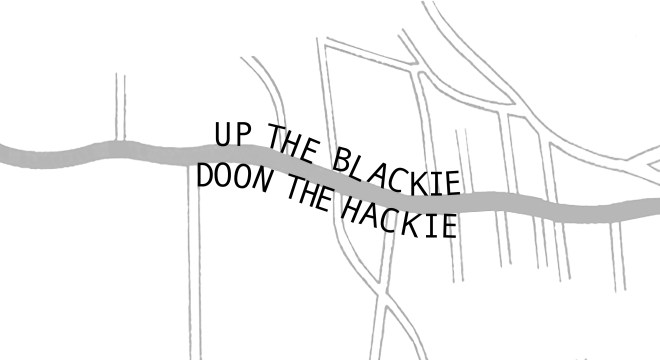
A description used by Catherine Fagan ( then aged 7 years) of her Dad’s journey driving a Dundee tram.
 THE ARTFUL DONDER